
Why This Topic Landed in Japan
A ransomware group known as Qilin — blamed for the 2025 cyberattack on Asahi Group — drew attention after one of its alleged core members, a Russian man in his late twenties, was arrested in Osaka while traveling and handed over to Germany in early October over the extortion of a German company. In a television interview, Qilin called Japan "one of the worst countries for computer security" and warned that attacks on Japanese companies and government bodies could increase, framing it as "not a threat, but our professional opinion." Qilin's phrasing was "one of the worst," and its warning of more attacks is a subjective claim rather than an objective ranking. Coming right after a run of data leaks at large firms and services, the remark landed as self-criticism about years of cost-cutting on security and as distrust of a government pushing digitization without the defenses to match. Others played it down, noting that attackers routinely bluff and that the U.S. suffers far more.
Key Reaction Themes
- Rueful agreement (most common) — Most commenters accepted the criticism, calling Japan an easy mark and pointing to corporate indifference and cost-cutting on security.
- Distrust of the government and the Digital Agency — Sarcasm aimed at an administration that champions digitization while its defenses lag, and at officials mocked as not even knowing what a USB is.
- Playing down the overseas jab (a smaller group) — Some argued it was the attackers' bluff, that the U.S. is hit far harder, and that this is a worldwide problem rather than a uniquely Japanese failing.
What Japanese Netizens Are Saying
A Hacker Group's Verdict and the Arrest of a Qilin Member
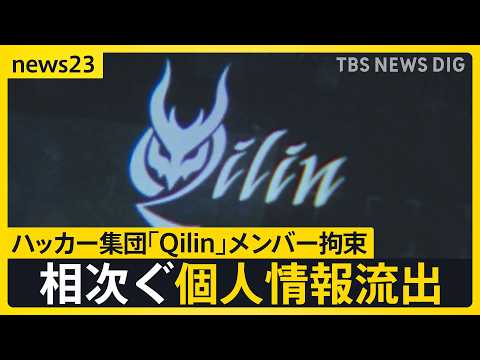
A core member of the ransomware group Qilin is arrested in Osaka, and the group tells an interviewer that Japan has one of the world's worst computer-security setups.


【速報】🇯🇵ランサム集団「Qilin(キリン)」の中心メンバー、日本で拘束と報道 ・ロシア国籍の男(28)を5月、旅行中の大阪で拘束 ・ドイツ企業への恐喝容疑で、10月2日にドイツへ引き渡し ・同集団は昨年のアサヒへのサイバー攻撃で犯行声明
Sources: Yahoo! news, 2ch
Comments:
- "Looks like we're total easy marks."
- "It's because they treat computer and network security as an extra expense rather than a necessary cost."
- "Even so, the computers and the software are all American-made, aren't they?"
- "We've been coddled, protected by the Japanese-language barrier. Now the unnatural Japanese in phishing messages has evolved into perfect Japanese thanks to AI translation, and careless employees open the attachments right away."
- "They're spouting all this talk, but their guy got arrested, didn't he?"
- "For the record, the damage in the U.S. appears to be 100 times greater."
- "Fax security was actually better. Securing things with the hanko-stamp and fax culture was the right answer all along."
- "'The worst' and 'one of the worst' are completely different — pity that people aren't used to English."
- "There really are so many fools who dismiss money spent on security as waste. They swallow hiring security guards as a necessary cost, but the moment it's about computers they suddenly become fools who can't grasp it — truly baffling."
- "And yet they went and gutted the Personal Information Protection Act."
- "Japanese companies and their executives have spent years giving the cold shoulder to departments like security and maintenance that don't translate into direct numbers or money. Feels like the bill for that is all coming due at once."
- "Don't underestimate a country that had a Digital Minister who didn't even know what a USB is, and a Prime Minister who said 'itto revolution' (IT revolution)!"
- "Like with earthquakes, they'll only improve after suffering large-scale damage, right? Not lifting a finger until they get hurt is so very Japanese, though."
- "Russia always makes bluffs like this, so there's no need to take it seriously. It's like this all over the world; Japan isn't much different from anywhere else."