Why This Topic Landed in Japan
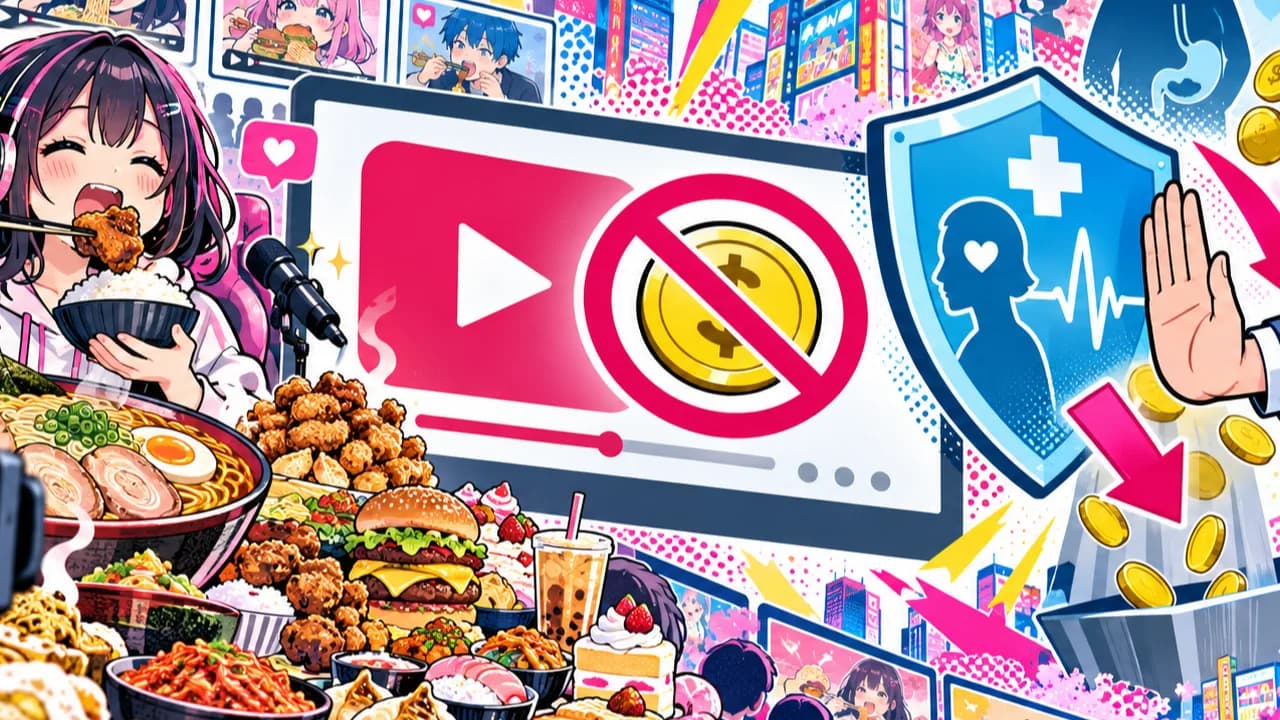
Google-owned YouTube strengthened its community guidelines and ad-monetization standards around content that promotes or imitates eating disorders and binge eating. Channels handling excessive big-eating and the Korea-born "mukbang" genre began seeing monetization suspended and videos deleted in bulk; one creator with around 440,000 subscribers said their channel was demonetized and that they had paused uploads to avoid further penalties. The move landed on long-standing discomfort in Japan with turning food waste and binge-and-purge into a spectacle, so a lot of people greeted it as "obvious" or even "serves them right." The policy is aimed at eating-disorder-promoting videos, not a blanket ban on all mukbang or a wipeout of every creator's income, so "big-eating YouTubers are now jobless" reads as an exaggeration. Running alongside the applause were worries that AI-based enforcement would sweep up healthy big eaters and even beauty or daily-life channels, plus a recurring complaint that harassment and nuisance channels should be policed first.
Key Reaction Themes
- Welcoming it out of distaste for the health harm and spectacle — The largest share said the spectacle of gorging was "unpleasant," that "just eating a normal amount deliciously is enough," and that the binge-and-purge acts were "repulsive."
- Sympathy for rare-metabolism eaters and collateral bans — Concern that people who are genuinely thin natural big eaters could lose their livelihoods.
- Doubts about the priorities and the calibration — Platform criticism that "defamation and nuisance channels should be cracked down on first," and that "the direction of this regulation is overly thin-skinned."
- Cynicism about the pile-up of rules — A smaller strand: "the more rules stack up, the more boring it gets," and "is this only a South Korea thing?"
What Japanese Netizens Are Saying
YouTube's demonetization crackdown on big-eating and mukbang videos
Citing the promotion of eating disorders, YouTube began stripping monetization from and restricting extreme big-eating and mukbang content.

유튜브 가이드라인 업데이트 먹방 수익창출 박탈 유튜브가 섭식장애 규제를 강화하며, 폭식과 대용량 먹방의 수익 박탈을 시작 과거 영상까지 소급 적용되자 유튜버들은, 수백개 먹방 영상을 대거 삭제하는 중


Sources: Yahoo! news, 2ch
Comments:
- "They should be regulating the defamation channels instead. It's a bigger problem that behavior clearly amounting to libel or fraudulent obstruction of business goes unregulated and left alone. You report it and they do nothing about it."
- "But I feel bad for the genuinely rare-metabolism, skinny big eaters. On a normal income you can't afford to eat like that, right. Well, there are plenty of streaming sites besides YouTube, so maybe there's a way out — TwitCasting and the like."
- "Isn't the direction of this regulation a bit of an oversensitive-bully move?"
- "But they agreed to the terms and then post videos and stream to earn money, right? The side that makes the rules is always stronger — that's just how the world works."
- "If they actually eat it, fine, but the ones who vomit it back up are genuinely repulsive."
- "The American YouTubers who actually eat it really do balloon up at an incredible pace and eventually drop out from health trouble. It's a good example of what happens if you really eat like that."
- "The clearly eating-disordered women you see a lot lately are unpleasant — they look like old crones and their way of eating is awful. I do feel sorry for them, though."
- "Aside from the vomiting ones, it's fine since it's their livelihood, but I don't like the food-wasting types like Kanokstar."
- "AI videos with no AI disclosure can be stopped too. Political and imperial-family disinformation videos aren't needed either. Now then, what will be left?"
- "What's fun about watching that stuff?"
- "Just eating a normal amount deliciously would be enough — the idiotic gorging is, frankly, idiotic."
- "Looks like almost all of them are about to get demonetized, lol."
- "See, as the regulations pile up it just gets more and more boring."
- "Is this only a South Korea thing?"