Why This Topic Landed in Japan
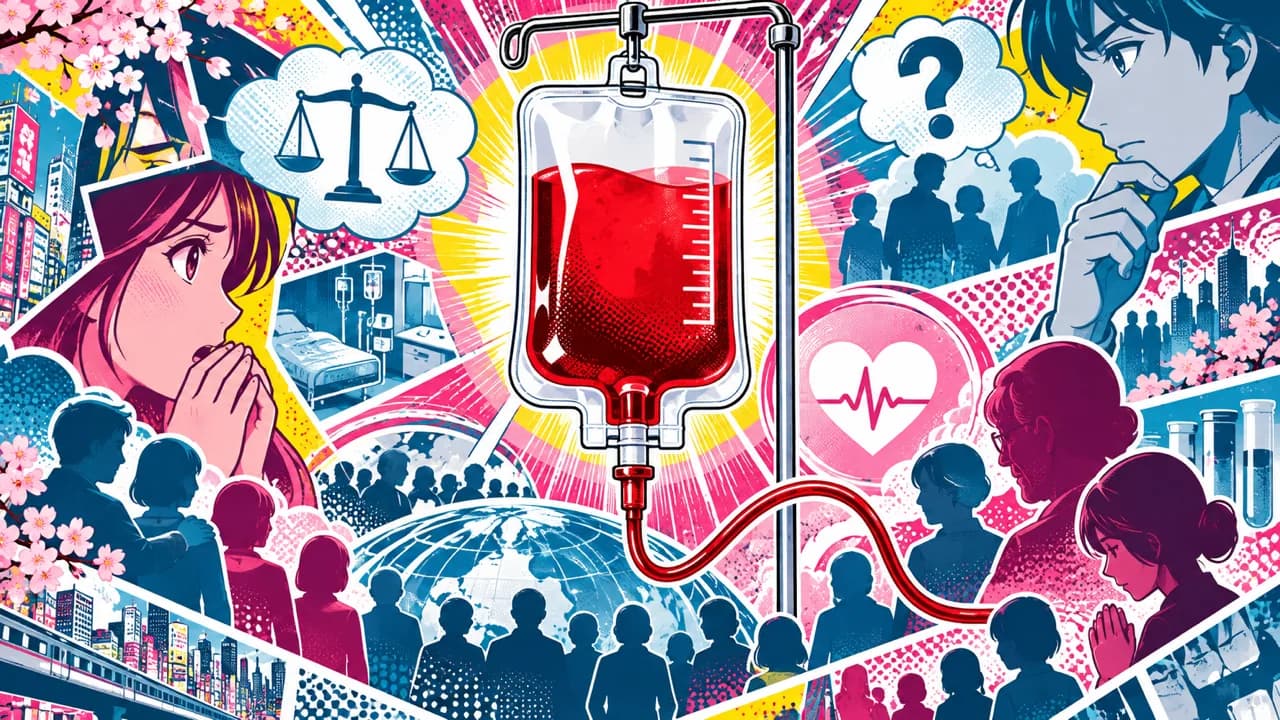
Jehovah's Witnesses' refusal of blood transfusions is well known in Japan through past lawsuits and deaths over whether children could be saved, making it a symbol of the clash between faith and medicine. On the 18th, the group's Governing Body told members worldwide, in a video message, that whether to accept four main blood components derived from others — red cells, white cells, plasma and platelets — is now a matter of each member's conscience; it kept its refusal of whole-blood transfusion in place. Because the change touches that core teaching, it immediately raised the question, "then what were the people who died following the doctrine?" Sympathy runs strongest for children refused a transfusion by a parent's will rather than their own faith. With the timing and reasons left unclear, many read it cynically — that a leader must have needed a transfusion, or that it was self-protection against criticism. Some also read it as a blanket lifting of the ban, though whole blood is still refused and even the main components are left to each member.
Key Reaction Themes
- Sympathy and anger for past victims (most common) — Most asked what the believers and children who died following the doctrine were for, and said the group should apologize to their families.
- Suspicion of "a leader's convenience" — Many guessed a higher-up must have needed a transfusion, doubting the stated reasons.
- Mockery of the sudden reversal — A "religion whose teachings suddenly change" and "bending the creed out of favoritism" drew ridicule.
- A money-and-power critique — Some cast religion as a tool for money and authority that "retrofits any interpretation" when convenient.
- A small defense of individual freedom — A few said theology can evolve as medicine does, or that people should be free to do as they wish.
What Japanese Netizens Are Saying
Jehovah's Witnesses leave four main blood components to each member's conscience
The group that had refused transfusions said accepting four main components derived from others is now up to individual conscience, while keeping the whole-blood ban.


【エホバ 他人の血の輸血一部解禁へ】 news.yahoo.co.jp/pickup/6595795

Sources: 2ch
Comments:
- "The children who died because their parents wouldn't allow a transfusion over this are truly pitiful."
- "Someone who refused a transfusion out of their own faith and died probably got what they wanted, but those refused by others' will — children especially — that's a genuinely hopeless story."
- "Isn't the decent thing to apologize to the believers who died for the doctrine, and their families? A 'we were wrong, we're sorry.'"
- "The parents of the child who died from refusing a transfusion must be furious."
- "The believers who died all this time without a transfusion look like fools now."
- "Didn't some higher-up in the Witnesses end up in a condition where a transfusion was indispensable?"
- "A religion whose teachings suddenly change, lol."
- "A religion ditching its creed, lol. Do this once and it becomes 'change the rest to fit the times too!', and the devout ones (the ones who drop the money) are the first to leave."
- "Bending your creed out of favoritism for your own — aren't they ashamed?"
- "How lame — that's the extent of the conviction?"
- "In the end, religion is just a tool for money and authority, so once it's inconvenient for the bigwigs they can retrofit any interpretation they like."
- "A religion that makes light of medicine."
- "Next thing, vegans will be saying chicken is OK too."
- "Medicine overturns its old certainties too, so theology can have new findings as well, surely."
- "I don't think the view that not getting transfusions is natural is that strange, honestly. Do what you want, I say — though I barely know their other doctrines."