Why This Topic Landed in Japan
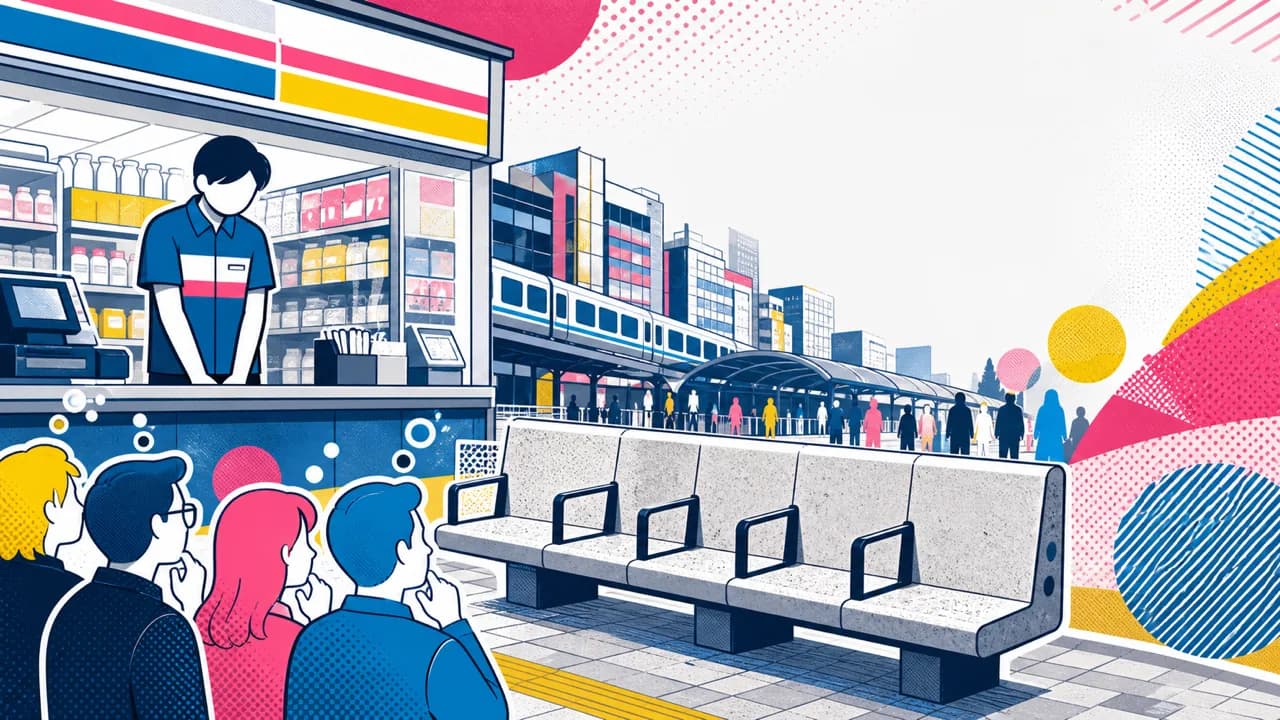
Three loosely connected items all hit the same nerve: how much hidden hardship and exclusion is baked into Japan's reputation for cleanliness, safety, and order. A scene from the manga Kamiina Botan showing anti-homeless bench design was singled out by overseas anime fans as a small, dystopian detail tucked into an otherwise pastoral story. In parallel, a Korean reader asked why Japanese convenience-store clerks remain standing even when there are no customers — sparking a domestic argument about whether that's "quality" or unnecessary suffering. A third post compared German and Japanese vending machines, with commenters circling back to public safety as the real differentiator. Taken together, the three threads reframed familiar Japanese norms through outside eyes and pulled the question of whether the norms are healthy back into the open.
Key Reaction Themes
- "The neat surface hides a coldness" — Foreign manga readers were unsettled to see anti-homeless architecture rendered casually in a feel-good story, and some Japanese commenters acknowledged the design has spread far enough that homeless people are increasingly invisible.
- "Standing for no one is a cultural problem, not a service quality" — Both Korean readers and younger Japanese commenters questioned why clerks can't sit, study, or use a phone when the store is empty. Defenders cast it as Japanese-style discipline; critics called it pure performative suffering.
- "Vending machines outdoors are about safety, not virtue" — The Germany comparison settled into the view that Japan's outdoor vending machines work because of underlying public order, not national exceptionalism — and several commenters worried that order is now fraying.
What Japanese Netizens Are Saying
- "Modern benches really aren't supposed to look like that anymore."
- "Even under the bridges around here, they've laid down stones so you can't sleep."
- "Come to think of it, you don't see homeless people anymore."
- "Japan has way too many people who think 'suffering equals work' 😭"
- "I hear that in Korea, when the store is empty, clerks study or use their phones."
- "It's a dumb norm. Fine, then I quit — the owner can stand alone all day."
- "A Japanese convenience store with no customers doesn't exist. A store like that would already be closed."
- "In an unsafe country a vending machine is basically food on the street, ready to be taken."
- "Purely on function and performance, the German machines are clearly better."
- "Honestly it's the difference between a country that reflected on its war and one that didn't."
- "You can't pin everything on migrants, though. Japan has had sticky-fingered locals forever too."