Why This Topic Landed in Japan
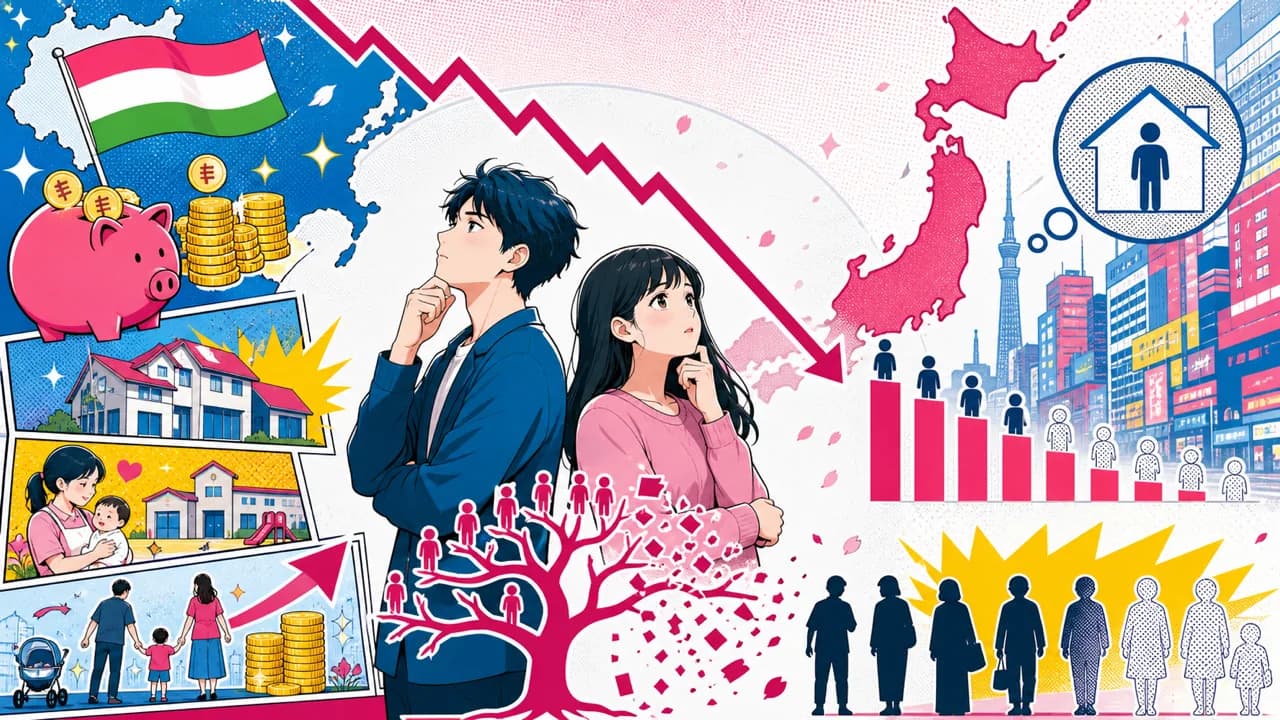
Japan's birthrate debate is no longer just about child allowances; it is also about wages, marriage, housing, time, and whether people believe society has a future. Hungary is often cited as an example of aggressive pro-family policy, so reports of continued birthrate weakness gave Japanese commenters a ready-made argument against cash-first solutions. The domestic projection that many men and women may never have children made the comparison feel personally relevant.
Key Reaction Themes
- Money is not enough — Posters argued that subsidies cannot solve the broader collapse of marriage and household formation.
- Class sorting anxiety — Several comments framed marriage and childrearing as options increasingly limited to the economically secure.
- Distrust of policy burdens — Japan's child-support funding debate was read less as help for families and more as another tax-like burden on people who are already opting out.
What Japanese Netizens Are Saying
- "The 2025 birthrate: 1.29."
- "Japan started a childless tax, but will the birthrate really recover?"
- "It's a question of what costs more: paying the childless tax or raising a child."
- "If Japan did this, only foreign residents' children would increase."
- "And that's why it collapsed."
- "I've given up on marriage. I plan to end my life single."
- "The number of children married couples have is actually increasing."
- "Only the economic upper class can marry and have children now."
- "No money, no time. Absolutely impossible."
- "I don't reject childrearing support itself, but focusing only on that may ironically have raised the childless rate."