Why This Topic Landed in Japan
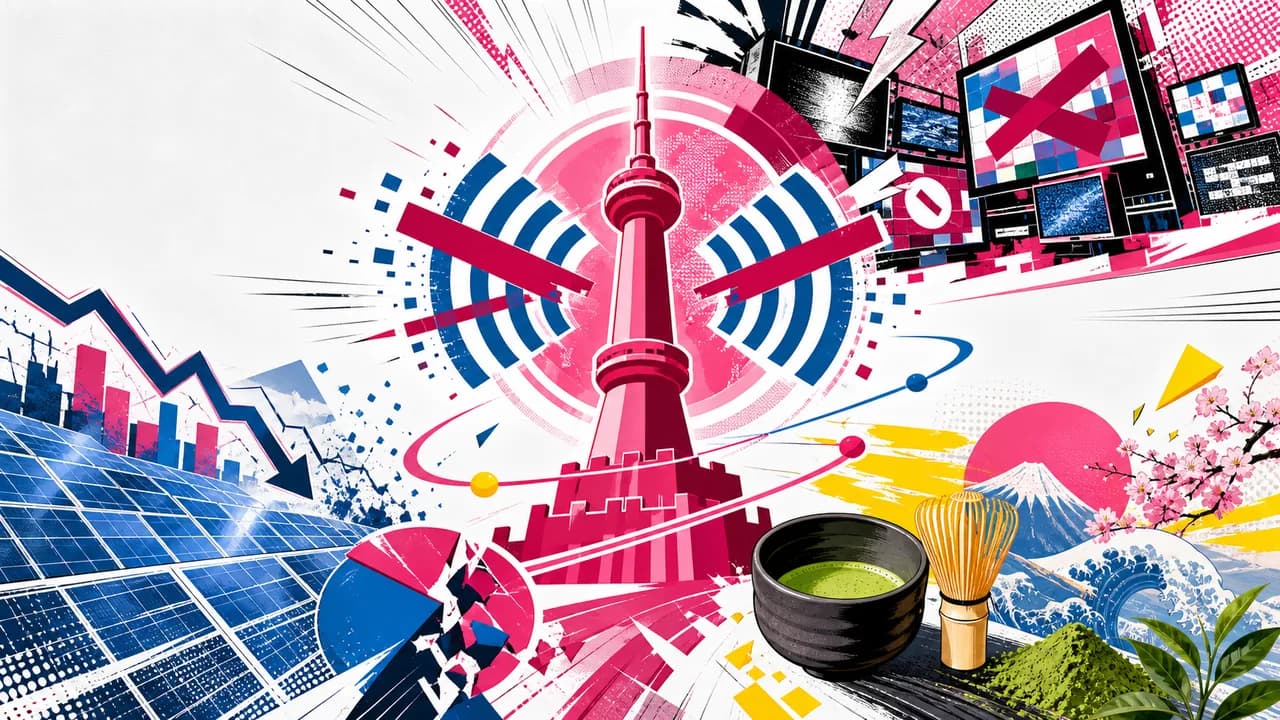
Tiananmen has long served in Japan as a symbolic critique of China's system, and the sheer thoroughness of the censorship was read as "proof it still stings." Solar panels tied into economic frustration that Japan's renewable-energy surcharge is effectively keeping Chinese manufacturers alive. And matcha — against a backdrop of a recent overseas boom and soaring prices — triggered a defensive instinct to "protect cultural assets." The verifiable facts here (censorship, solar losses) are strong; the "matcha was stolen" framing is more a value judgment than a factual claim.
Key Reaction Themes
- Mockery and wariness of censorship — Ridicule of the futility of erasing what "the whole world has on record," mixed with unease at how thorough it is.
- Frustration at the economic offensive — Anger that renewable-energy surcharges flow to Chinese makers.
- Defensiveness in the origin fight — A line that "even if it originated in China, Japan created the value."
Sources:

中国、天安門事件37年を報じたNHK海外放送遮断 情報統制で多くの若者は事件を知らず sankei.com/article/202606… 中国では4日、NHK海外放送の天安門事件37年のニュースの際、1分超にわたり放送が遮断され、画面上にカラーバーと「信号異常」との中国語が表示された。

- 中国、天安門事件37年を報じたNHK海外放送遮断 情報統制で多くの若者は事件を知らず - 産経ニュース
- (# `ハ´)天安門事件を消し去るアル!!報道禁止!!海外放送遮断アル!!情報統制!!検閲!!あらゆる手段を… [789920621]

「勝ちすぎた」中国太陽電池、巨額赤字産業に nikkei.com/article/DGXZQO…

What Japanese Netizens Are Saying
Information control over Tiananmen
On the 37th anniversary of Tiananmen, China's thorough censorship and broadcast blackouts drew fresh criticism.
Comments:
- "Just how inconvenient is it for them, lol."
- "Short of ruling the whole world, it's impossible."
- "Why try so hard to hide Tiananmen? You did it, so own it and trumpet 'defy the Party and this is what happens.'"
- "It won't be erased while I'm alive. I'll say it as many times as it takes."
- "No matter how taboo they make it inside China, the whole world has the record — what a waste."
- "It was broadcast live around the world and there's mountains of footage left — what are they even going to do, lol."
- "The figure of a million dead might not be so far off — if the toll were small, there'd be no need to hide it."
- "Erasing the Tiananmen the world reported on… they've purged so much that all the capable people are gone."
- "It's working, it's working."
Chinese solar overcapacity and losses
The reality of China's solar industry flooding global markets at a loss was discussed against Japan's renewable-energy surcharge.
Comments:
- "Same as with EVs — they really don't know the meaning of moderation."
- "Japanese people funnel ¥4 trillion a year to Chinese makers through the renewable surcharge, and they're still in the red?"
- "This is the result of pouring in endless subsidies."
- "And on top of that they're exporting losses to the whole world."
- "Grabbing the subsidies is the whole point, isn't it."
- "By the time it breaks and needs repair or replacement, the company is gone, so it costs you even more."
- "I mean, is there even such a thing as a profit here?"
- "'We'll make Japan buy it.'"
- "Fundamentally it's no different from the Great Leap Forward era."
The fight over matcha's origins
A claim that "matcha was stolen by China," plus an AI answer that its origin is Chinese, set off a debate about the origin and refinement of cultural assets.
Comments:
- "From China's point of view it's basically re-importing, huh."
- "It was originally brought over from China."
- "(Grok's answer) The origin is China, but it was greatly refined and developed into what it is in Japan."
- "Just slap a tariff on it like with rice."
- "Tea's real home is China; Japanese tea is like playing house by comparison."
- "If anything, Japan's the one that copied it."
- "Culture mostly comes from China anyway."
- "They're not even claiming Japanese origin — they're talking about cultivation technique, so they think the craft of making it delicious is Japan's."
- "Japanese matcha has gotten so expensive that this is actually a help — Chinese matcha might catch on in Japan too."