Why This Topic Landed in Japan
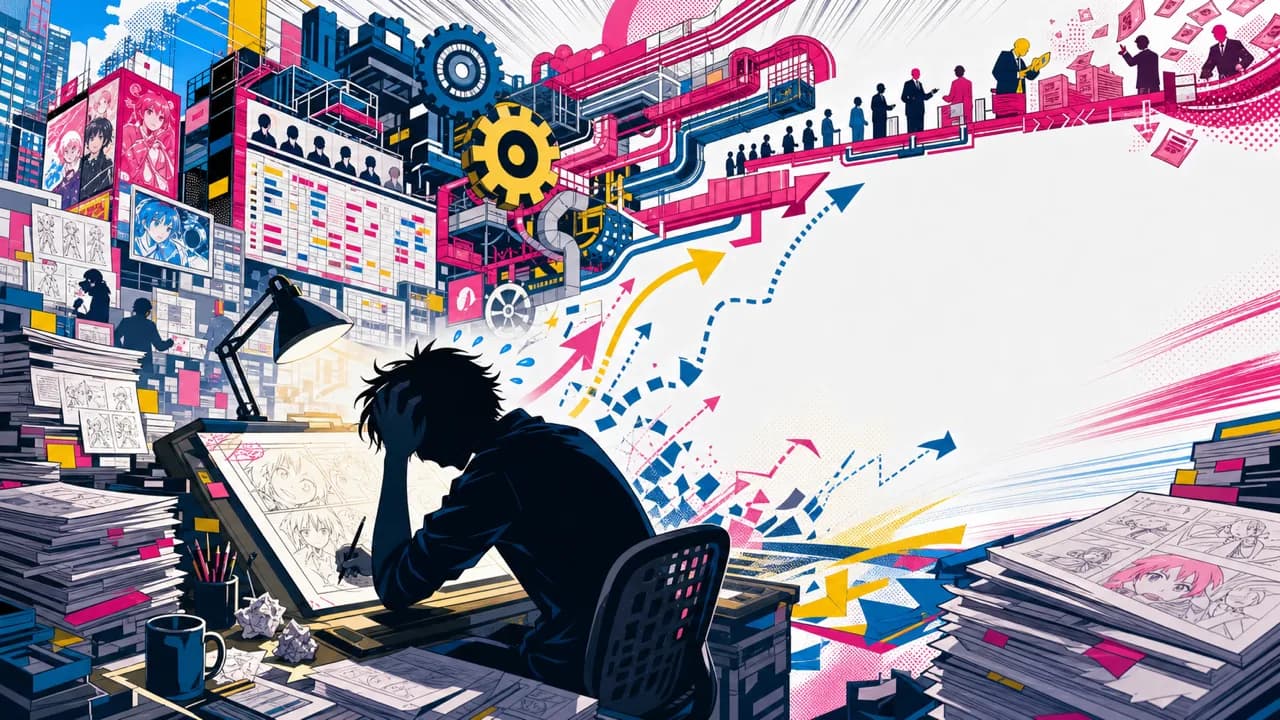
1843 Magazine, The Economist's sister publication, published a reported piece on June 19, 2026 — "The strange disappearance of Japan's animators" — asking why an industry with unprecedented global popularity suffers chronic understaffing and low pay. Its reporter traveled to Japan and interviewed voices across generations, from a Studio Ghibli veteran to Kiyotaka Oshiyama, director of the hit film Look Back, and young aspirants. A translated version reached Japanese readers via Yahoo News on July 26 and spread across online forums by July 28. The outside perspective reignited long-simmering domestic grievances: criticism of middlemen skimming revenue, the production-committee system's distribution of profits, and doubts about where Cool Japan policy money went — while others pushed back that most production committees operate at a loss, turning the thread into a full-blown structural debate that reached back to Osamu Tezuka's era and forward to talk of strikes and unionization.
Key Reaction Themes
- Anger at middlemen and profit distribution — The most common reaction blamed intermediaries and production committees for revenue not reaching the people who actually draw.
- Counterarguments and realism — Others noted that most production committees are in the red and warned that hunting for a single villain will not fix the economics.
- Policy and history — Commenters questioned why the Cool Japan Fund's large budget never reached studios, and traced the low-fee structure back to the Osamu Tezuka era of television anime.
What Japanese Netizens Are Saying
1843 Magazine's report on Japan's vanishing animators
A British magazine's on-the-ground report asked why Japan's anime workforce is collapsing despite global popularity, setting off a structural debate at home.
Sources: Yahoo! news
Comments:
- "Because the skimming off the top is brutal, no?"
- "Because production takes the profits and neither rights nor money flow down to the people on the ground."
- "Eighty percent of production committees are in the red, so there's no bottomless pot of money anywhere to hand to the studios."
- "Why did the Cool Japan Fund's massive budget never reach the production floor?"
- "It airs all over the world, yet there's no system for animators to actually get paid properly. That's beyond wrong."
- "Isn't it precisely because it's a sweatshop that the quality is so high?"
- "It's Osamu Tezuka's fault, honestly, kind of for real."
- "Tezuka actually paid his animators high wages. His idea was to earn money from manga and pour it into anime, and he deliberately took absurdly low production fees from TV stations, profitability be damned — because he wanted to make sure no one but him could make TV anime."
- "Animators should all go on strike at once."
- "The number of prime-contractor studios has grown, hasn't it. And along with that, I feel like anime using overseas subcontractors has increased a lot."
- "What I don't get is: who's actually making the money here? Middlemen?"