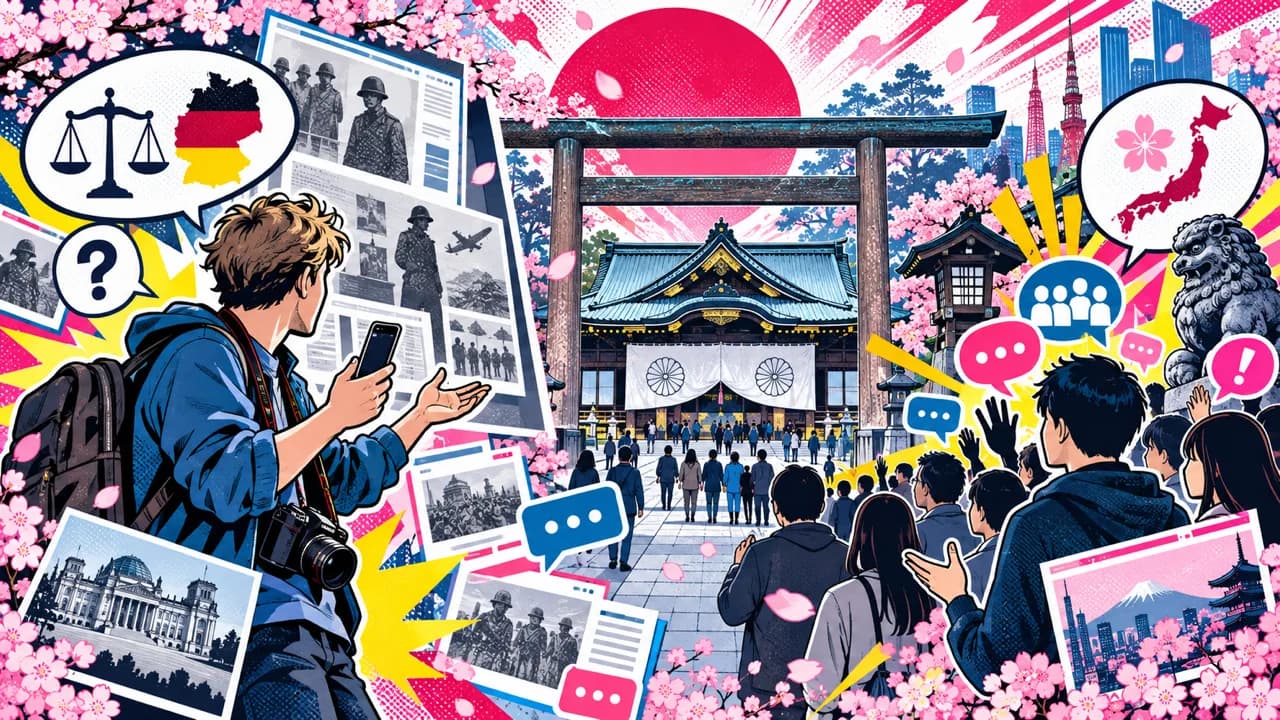
Why This Topic Landed in Japan
Vehicle attacks in Europe tend to be discussed in Japan through the frame of immigration policy, so attention moves quickly from the incident to speculation about the background. Because the target this time was an LGBTQ event, and because arguments over diversity and political correctness carry their own domestic charge, the conversation slid away from the victims and toward commentary on the movement. Berlin police and prosecutors have confirmed that a vehicle drove into the crowd, that a stabbing occurred, and that a suspect who fled is under investigation; the number of injured varies between 14 and 29 across outlets, and the motive and background remain under investigation. The claim circulating online that the suspect had been identified as an Islamist extremist runs ahead of the official statements. The Korean media story arrived on separate ground: reports from Korean outlets about Japan that do not match everyday experience have a long history of drawing skepticism, and "I have never seen this trend" became the whole of the reaction.
Key Reaction Themes
- Distance from the event itself — More fatigue with the subject and distrust of attendance figures than engagement with what happened.
- Guessing at the perpetrator — Attribution to migrants whose faith rejects LGBTQ people was thrown out ahead of any official finding.
- Doubt about the framing, plus a flat condemnation — "Is this terrorism?" and "another pedal mix-up" sat beside a direct statement that killing someone is contemptible whatever the reason.
- Disbelief at the Korean report — Nobody had heard of "Hanbongo," and several expected Japanese outlets to repeat the claim uncritically.
What Japanese Netizens Are Saying
A car drives into an LGBTQ celebration in central Berlin
A car drove into a crowd at an LGBTQ celebration in central Berlin, reportedly killing one person and injuring 14.

LGBTQ祭典で群衆に車 1人死亡、14人負傷 ベルリン中心部 asahi.com/articles/ASV7T… ベルリン中心部で25日夜、LGTBQの人びとの祭典が行われている最中に、群衆に車が突っ込んだ。警察によると、1人が死亡し、他に14人が負傷したという。祭典は中止された。

Sources: Yahoo! news, 2ch
Comments:
- "Enough with LGBTQ already."
- "It'll be the work of Muslim migrants whose doctrine won't let them accept LGBTQ."
- "LGBT, anti-nuclear, anti-war, pro baseball—these people announce inflated attendance numbers without a moment's hesitation."
- "What an unpleasant festival."
- "Is this terrorism?"
- "Another pedal mix-up?"
- "Whatever the reason, anyone who kills a person is scum."
- "In Japan a traffic accident is a traffic accident, but what about in Germany?"
- "So Islam drove in?"
A Korean report that "Hanbongo" is trending
Korean media reported that "Hanbongo," a blend of Korean and Japanese, has spread among young Japanese people, and the Japanese side said it matched nothing they had seen.

韓国って、なぜこんなにデマ多いのかしら? 本当に嘘が多すぎる。 顔も、歴史も「美容整形」して、 さまざまな文物の起源も偽る。 「大嘘民国」に改名すべきだと思う。

一回も聞いたことありません。

【韓国メディア】日本の若者が韓国語と日本語を混ぜた「韓本語(ハンボノ)」を積極的に使用 ・「パルリ(早く)」が日常会話へ ・パルリ イクネ(行くね) →「早く行くね」 ・パルリ タベテ(食べて) →「早く食べて」 韓国メディア(日本の若者が使うハンボノ語)要約


韓国語と混ぜた言葉なんか聞いたことないぞ? 誰か話したことある? 日本の若者が使ってるの?子供達が言ってるの聞いたことないんだが?
【韓国メディア】日本の若者が韓国語と日本語を混ぜた「韓本語(ハンボノ)」を積極的に使用 ・「パルリ(早く)」が日常会話へ ・パルリ イクネ(行くね) →「早く行くね」 ・パルリ タベテ(食べて) →「早く食べて」 韓国メディア(日本の若者が使うハンボノ語)要約
Sources: Record China
Comments:
- "Korea plagiarizes Japanese all the time, though."
- "The only one I know is 'horuhoru.'" [Translator's note: "horuhoru" is Japanese net slang mocking what posters see as Korean self-congratulation, not an actual Korean word.]
- "The Korean-derived word with the widest currency in Japan has got to be 'horuhoru.'"
- "The Japanese press: 'Let's work hard to turn Korea's fabrications into facts.'"
- "Fuji TV, being idiots, will probably take this at face value and report it."
- "The only ones I know are 'chowayo,' 'morugesseoyo,' and Yon-sama."
- "Quit messing around and get to work!"
- "Korea's stock market is in terrible shape right now, and it's exactly at times like that that they bring up Japan."
- "I do know 'panni hamu hasamunida.'"